June 11, 2026
For millions of outdoor enthusiasts, owning a recreational vehicle represents the ultimate expression of freedom and adventure. It is a home on wheels that promises spontaneous weekend getaways, extended cross-country road trips, and the unmatched comfort of bringing your personal amenities along into the great outdoors. However, the exhilarating reality of the open road eventually gives way to a more pragmatic, grounded dilemma: where do you park a massive secondary vehicle when it is not in use? As residential lots shrink and neighborhood guidelines tighten, finding a permanent, secure, and convenient home for your motorhome or travel trailer has become a significant challenge. Fortunately, modern specialized storage facilities offer a tailored, highly efficient remedy to this growing problem. According to Gitnux, 11% of U.S. households rent self-storage units, highlighting a widespread reliance on off-site space to manage valuable physical assets, including recreational vehicles. In this article, we will explore the comprehensive operational, financial, and logistical reasons why utilizing self-storage units is the absolute ideal choice for modern RV owners.
Maximizing Space in Residential Neighborhoods
One of the most immediate and tangible challenges of bringing a recreational vehicle home is the sheer physical real estate it consumes. Modern suburban properties are rarely designed with the proportions of a thirty-foot travel trailer or a Class A motorhome in mind. When parked in a standard driveway, an RV can completely overwhelm your home's exterior, blocking access to primary garages, obscuring architectural features, and forcing everyday commuter cars onto the street.
This spatial invasion goes beyond simple aesthetics; it compromises the functional layout of your property. Navigating around a massive vehicle to complete routine tasks like mowing the lawn, bringing in groceries, or letting children play safely in the front yard becomes a daily frustration. By transitioning your vehicle to dedicated storage options, you instantaneously reclaim your driveway, restore your property's natural functionality, and eliminate the stressful visual clutter that accompanies parking a commercial-sized asset in a residential zone.
Avoiding Complex Homeowners Association Regulations
For individuals residing in communities managed by a Homeowners Association (HOA), the logistical challenge of on-site parking is frequently compounded by strict legal and community frameworks. HOAs are notorious for maintaining rigorous guidelines regarding the types of vehicles permitted to sit within public view. In a vast majority of deed-restricted communities, parking a motorhome, fifth-wheel, or pop-up camper in a driveway or along the curb for more than a few hours is a direct violation of community bylaws.
Disregarding these strict community rules can quickly result in escalating monetary fines, strained relationships with neighbors, and formal legal warnings from the association board. Even if your property boasts a large side yard, regulations often dictate that any stored vehicle must be completely screened from view by expensive, specialized fencing. Opting for specialized RV storage units bypasses this administrative and neighborly friction entirely. It provides a legally compliant, stress-free alternative that keeps your standing within the neighborhood pristine while keeping your investment entirely secure.
Enhancing Vehicle Protection From Environmental Elements
An RV is a substantial financial investment, and like any structure or vehicle, it is highly susceptible to sustained environmental wear and tear. Leaving a motorhome exposed to the elements year-round accelerates its depreciation and invites a host of structural vulnerabilities. Intense solar radiation fades exterior paint, degrades fiberglass decals, cracks rubber seals around windows, and dries out expensive roof membranes, leading to catastrophic water leaks during rainy seasons.
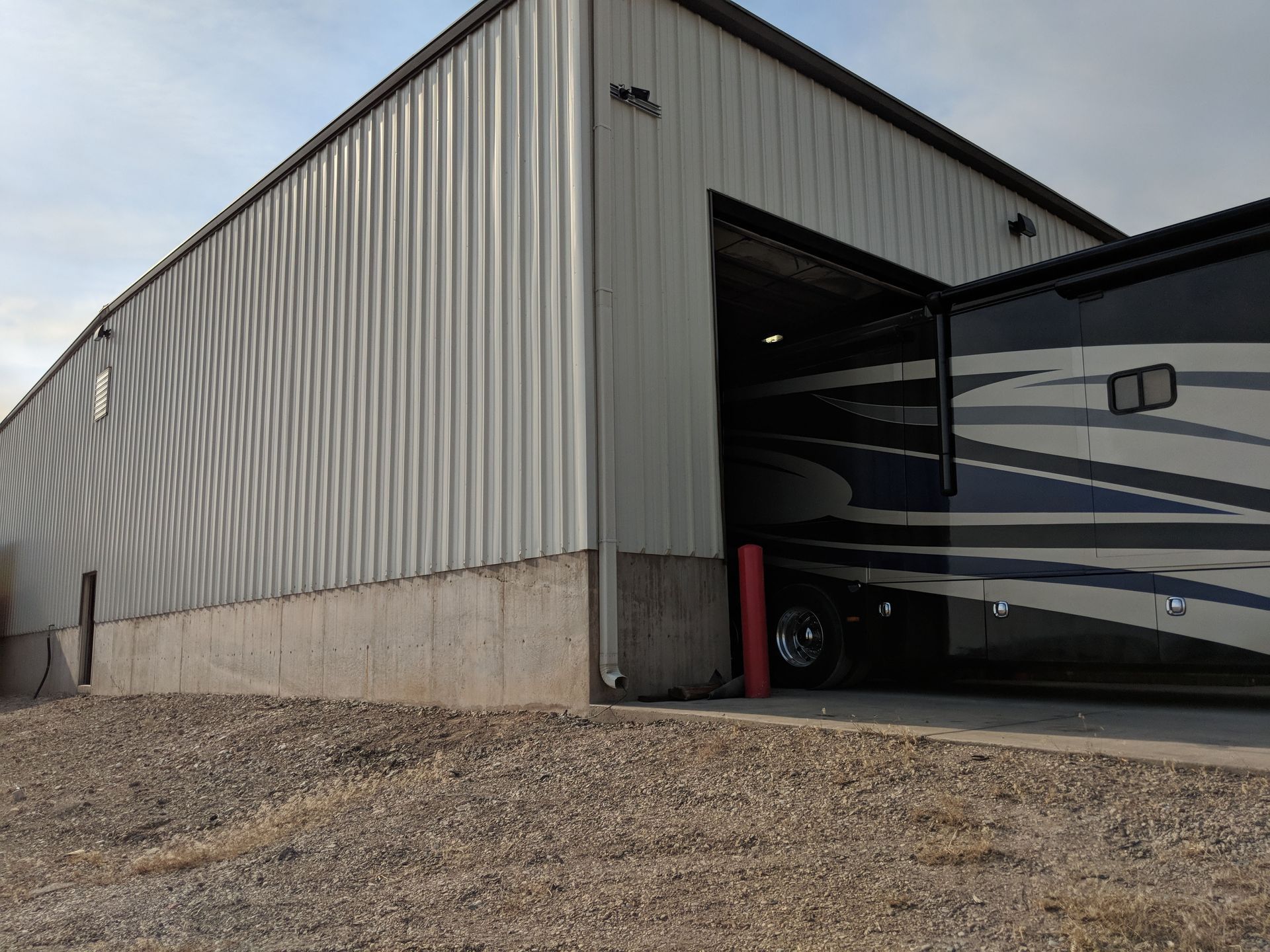
Similarly, winter weather introduces risks of freezing temperatures, heavy snow accumulation on roofs, and moisture retention that fosters toxic mold and mildew growth inside the cabin. Specialized RV storage units—particularly those offering covered or fully enclosed bays—act as a protective shield against these harsh weather cycles. By mitigating direct exposure to extreme heat, hail, snow, and rain, a dedicated facility preserves the structural integrity, exterior cosmetics, and long-term resale value of your vehicle.
Mitigating Mechanical Depreciation and Pest Infestations
Vehicles are mechanically designed to be operated regularly, and extended periods of static idling can introduce subtle, destructive forms of mechanical decline. When parked on soft surfaces like grass, soil, or gravel at home, moisture can evaporate upward from the ground, accelerating rust and corrosion on the vehicle's undercarriage and braking components. Furthermore, stationary tires parked on uneven terrain are highly prone to developing permanent flat spots, which compromise highway safety during your next trip.
Another pervasive threat to a stationary vehicle is wildlife. Mice, rats, squirrels, and insects view an idle, ground-parked motorhome as an ideal nesting site. These pests can cause extensive internal damage by chewing through complex electrical wiring harnesses, destroying upholstery, and creating unsanitary living conditions within the walls. Professional RV storage units feature paved, level concrete staging surfaces that prevent undercarriage moisture retention and tire flat-spotting. Additionally, these businesses employ aggressive, facility-wide pest management protocols, ensuring that your interior remains pristine and mechanically sound.
Ensuring Unparalleled Accessibility and Travel Convenience
A common misconception among new buyers is that storing a vehicle away from home reduces its overall utility and spontaneity. In practical reality, utilizing professional RV storage units can actually streamline and optimize your pre-trip preparation and post-trip teardown workflows. Most modern storage facilities are strategically situated in close proximity to major interstate highways, popular state parks, or key fuel and supply corridors, allowing you to hit your travel route seamlessly.
Furthermore, these specialized commercial properties are geometrically engineered to accommodate large-scale turn radii. They provide wide, paved drive aisles that make backing up, turning around, and maneuvering a massive rig entirely stress-free, unlike the tight angles and low-hanging tree branches of residential streets. Many properties also offer convenient, value-added amenities on-site, such as dedicated freshwater filling stations, wastewater dump stations, and air compressors for tire maintenance, consolidating your trip preparation into a single, highly efficient stop.
Preserving Long-Term Investment Value and Resale Potential
From a strictly financial perspective, purchasing a recreational vehicle is a major capital investment, and managing its inevitable depreciation curve is a primary responsibility for the owner. A well-maintained motorhome or travel trailer can retain a significant portion of its financial value for a decade or more, provided its exterior and mechanical infrastructure are kept in excellent condition. Potential secondary buyers are highly discerning, carefully checking for faded gel coats, roof patches, water stains, and signs of pest intrusion.
When the time arrives to upgrade or sell your rig, having a documented history of storing the asset within professional RV storage units serves as a powerful validation of proper care. It signals to prospective private buyers or dealerships that the vehicle was protected from seasonal weathering, mechanical neglect, and environmental hazards. This demonstrable care directly translates into a higher market valuation, faster closing times, and a significantly better return on your initial recreation investment.
The decision to transition your recreational vehicle from a cramped residential driveway or a legally precarious suburban street into a professional facility is one of the most practical upgrades an owner can make. By taking advantage of specialized infrastructure, you successfully reclaim your home's physical space, eliminate stressful friction with Homeowners Associations, and insulate your vehicle from unpredictable weather patterns, mechanical decline, and security threats. Ultimately, utilizing professional RV storage units transforms the logistical headaches of ownership into a seamless, highly organized experience, ensuring that your focus remains entirely on the joy of your next open-road destination. Protect your investment and simplify your travel logistics today by contacting Eastex Storage to reserve the perfect secure space for your home on wheels.